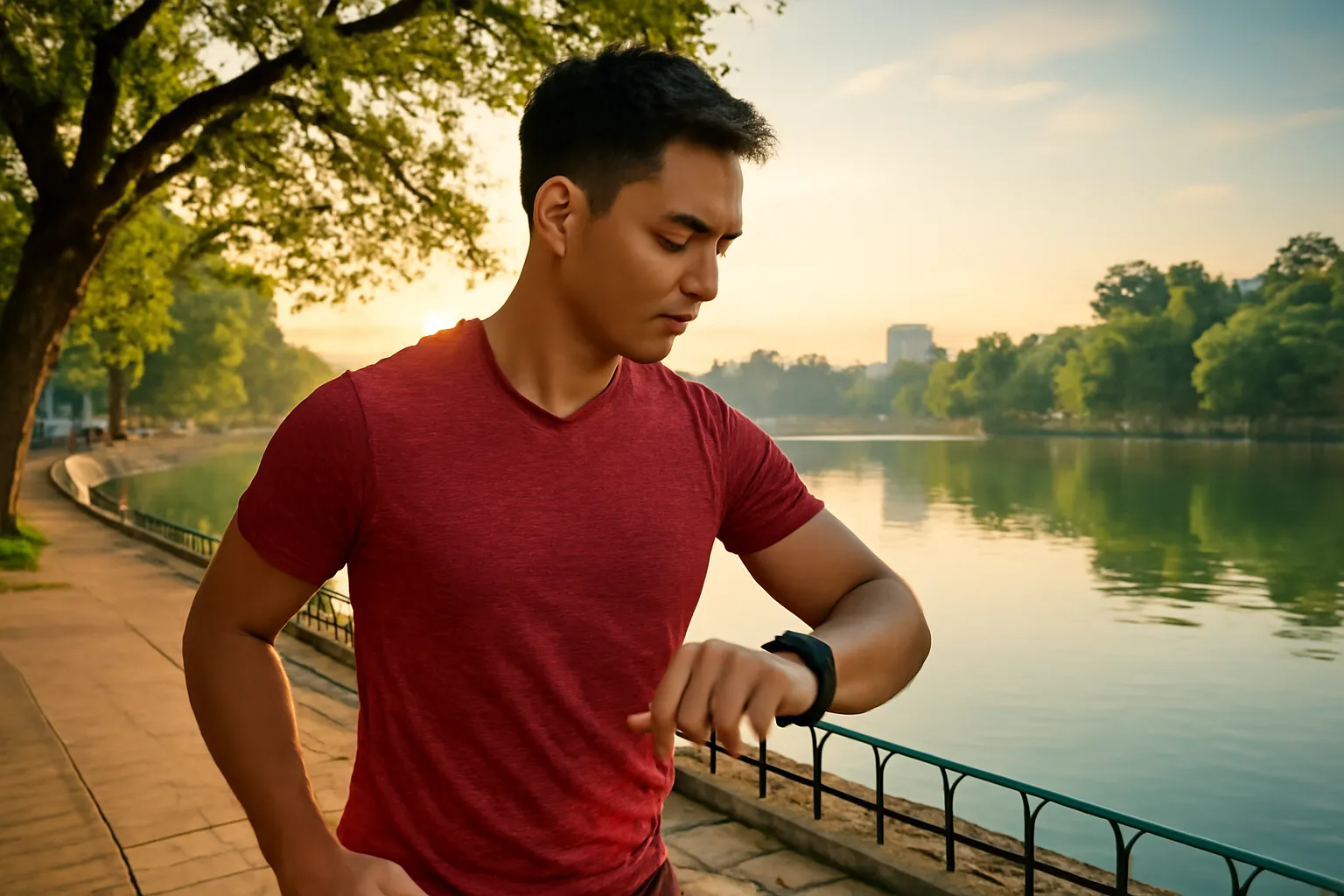
Smartwatches measure heart rate at rest and step counts fairly well, but blood oxygen, sleep stages, calories and stress scores are estimates that can be off by a wide margin, especially during intense movement, with a loose strap or on cold hands. Treat the numbers as trends that prompt questions, not as a diagnosis, and see a doctor about symptoms whatever the watch says. Your health data also travels to the maker's cloud and possibly to linked apps, so review sharing settings.
Wearables are genuinely useful when understood. They nudge people to move, show when resting heart rate creeps up during illness or stress, and occasionally flag something worth checking. They are harmful when people panic over a single odd reading, or relax because the watch looked normal while their body was telling them otherwise.
How a watch "sees" your body
Most health features on a smartwatch rely on light. Small green and red LEDs on the back shine into the skin, and a sensor measures how much light comes back. As the heart pumps, the amount of blood under the skin changes slightly with each beat, and so does the reflected light. Software turns that rhythm into a heart rate. The same principle, with different colours of light, is used to estimate blood oxygen.
Everything else is built on top of these signals plus movement data from an accelerometer. Sleep stages are inferred from movement and heart rate patterns. Calories are calculated from heart rate, movement, age, weight and a formula. Stress scores come from variations between heartbeats. Each extra step of inference adds uncertainty.
This explains why fit and conditions matter so much. A loose strap lets ambient light in. Cold hands reduce blood flow near the skin. Tattoos, dark skin tones and hairy wrists can affect some optical sensors. Fast, irregular movement, such as weightlifting or badminton, can confuse the algorithm into counting arm swings as heartbeats.
None of this means the watch is useless. It means its numbers are most reliable when you are still, the strap is snug, and you compare today with your own past readings rather than with someone else's.
What a smartwatch measures well, and what it only estimates
A rough guide for typical consumer watches. Individual models differ, so read the manufacturer's own notes on intended use.
| Measurement | How trustworthy | Best way to use it |
|---|---|---|
| Resting heart rate | Usually reasonable when the strap is snug | Watch the trend over weeks; a sustained rise can reflect illness, poor sleep or stress |
| Heart rate during intense exercise | Less reliable, especially with wrist movement | Use a chest strap if precise training zones matter |
| Steps and activity time | Fair for daily totals | Compare day to day; ignore small differences |
| Blood oxygen (SpO2) | An estimate; affected by fit, cold and movement | Do not use it to decide whether you are ill; see a doctor about breathing symptoms |
| Sleep duration and stages | Duration is fair; stages are educated guesses | Use it to notice patterns, such as late nights, not to diagnose sleep problems |
| Calories burned | Rough estimate | Treat as a loose guide; it can be off by a wide margin |
| Stress or readiness scores | Proprietary formulas | Interesting as a nudge, not as a medical measure |
Getting more reliable readings
Wear it snugly, a finger's width above the wrist bone. Tight enough that it does not slide, loose enough to be comfortable. Tighten it before workouts.
Measure at the same time of day. Morning resting heart rate, taken before coffee, is far more comparable from day to day than random checks.
Stay still for spot checks. Blood oxygen and ECG-style readings need you seated and still, with the arm resting.
Keep the sensor clean. Sweat, sunscreen and dust on the back of the watch weaken the signal.
Warm your hands in cold rooms. Air-conditioned offices can make readings drop simply because blood flow near the skin is reduced.
Enter accurate personal details. Height, weight and age feed into calorie and fitness estimates. Wrong inputs mean wrong outputs.
Update the watch and app. Manufacturers refine algorithms over time; updates can improve accuracy.
Compare with yourself, not with friends. Different watches and bodies give different numbers. Your own trend is the useful signal.
When a reading worries you
A single odd number is usually a measurement error. Sit down, rest for a few minutes, check the strap and measure again. If the reading returns to normal and you feel fine, note it and move on. Repeated alerts, or a reading that matches how you feel, are a different matter.
Some watches offer features designed to flag irregular heart rhythms, and in some countries specific features have received medical-device clearance for defined uses. Whether that applies to your model in Vietnam is something to check with the manufacturer and your doctor. Either way, an alert is a reason to book an appointment, not a diagnosis.
The opposite mistake is just as risky. Chest pain, shortness of breath, fainting, sudden weakness on one side of the body or confusion need urgent medical attention whatever the watch shows. Call 115 for emergencies. Do not spend precious minutes taking readings.
If you have a known condition, ask your doctor whether a wearable is useful for you and which numbers to watch. Some doctors welcome trend data from a watch; others prefer readings from validated medical devices such as a blood pressure monitor or a pulse oximeter.
Who sees your health data, and how to limit it
The manufacturer's cloud. Most watches sync data to the company's servers. Read what is stored, where, and whether you can delete it.
Linked apps. Fitness, diet and insurance apps may request access. Grant only what each app genuinely needs, and review permissions every few months.
Shared family accounts. If a family member can see your dashboard, they can see sleep times, locations from workouts and heart data. Make sure that is intended.
Workout maps. GPS routes that start and end at your home reveal where you live. Use privacy zones or keep routes private.
Employer or insurer programmes. Wellness schemes that reward sharing data can be helpful, but understand what is shared and whether you can leave without penalty.
Lost or second-hand devices. Remove the watch from your account and reset it before selling. Report a lost watch through the app if it supports that.
Account security. Use a strong password and two-factor login on the health account, as it holds very personal information.
Frequently asked questions
Can a smartwatch detect a heart attack?
No consumer smartwatch should be relied on to detect a heart attack. Chest pain, breathlessness or sudden weakness need emergency care: call 115 immediately.
Why does my watch show low blood oxygen at night?
Night readings are often affected by sleeping position, a loose strap and reduced blood flow to the wrist. If readings are repeatedly low or you snore heavily, feel unrested or breathless, talk to a doctor.
Are sleep scores accurate?
Total sleep time is roughly right for most people, but light, deep and REM stages are estimated from movement and heart rate. Use them to spot habits rather than to diagnose sleep disorders.
Should I share smartwatch data with my doctor?
Trend summaries can be helpful context, especially for resting heart rate or activity. Ask your doctor what is useful; they may prefer readings from validated medical devices.
Is my health data from a watch protected?
It depends on the manufacturer's policies and the apps you connect. Review privacy settings, limit third-party access and secure the account with two-factor login.