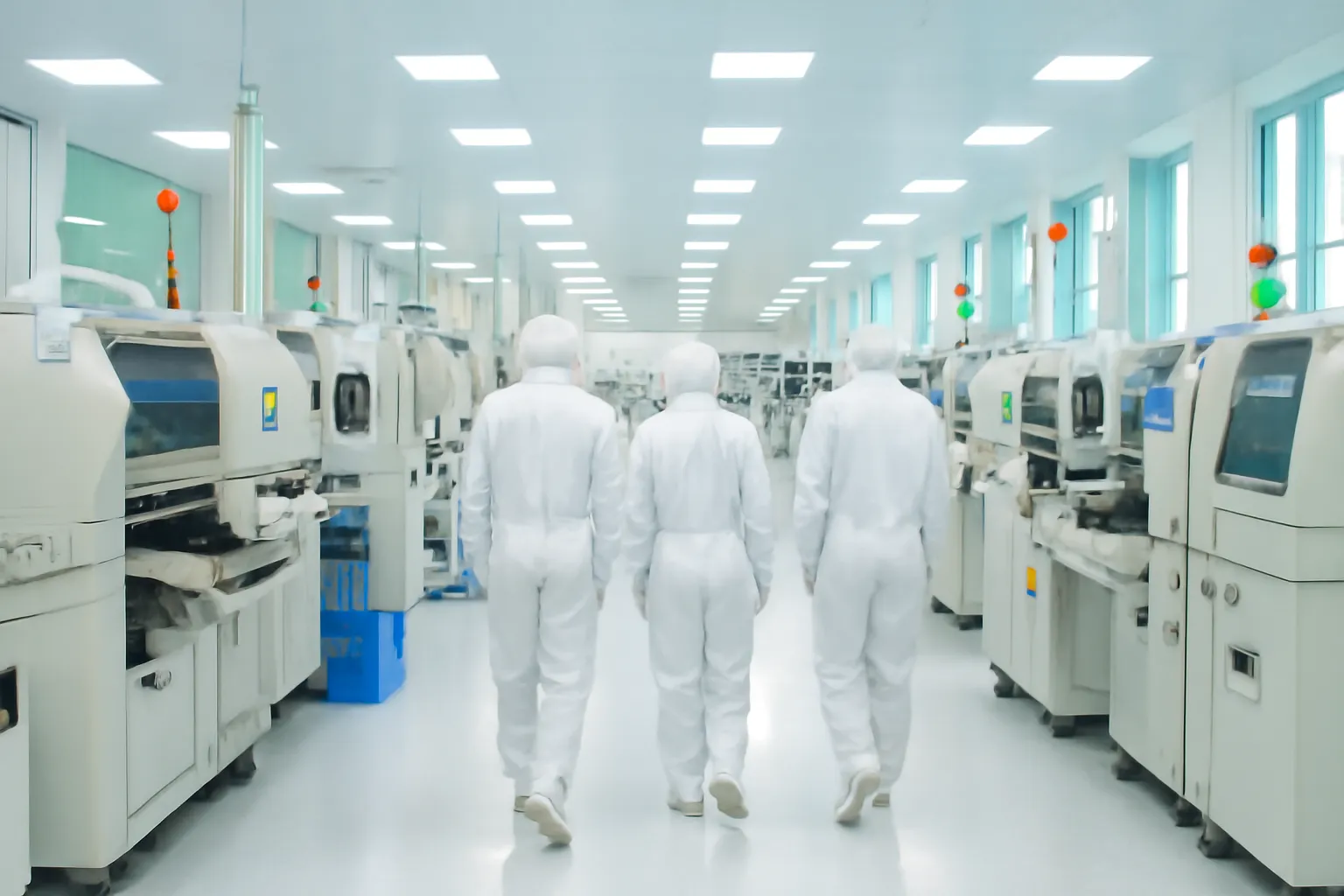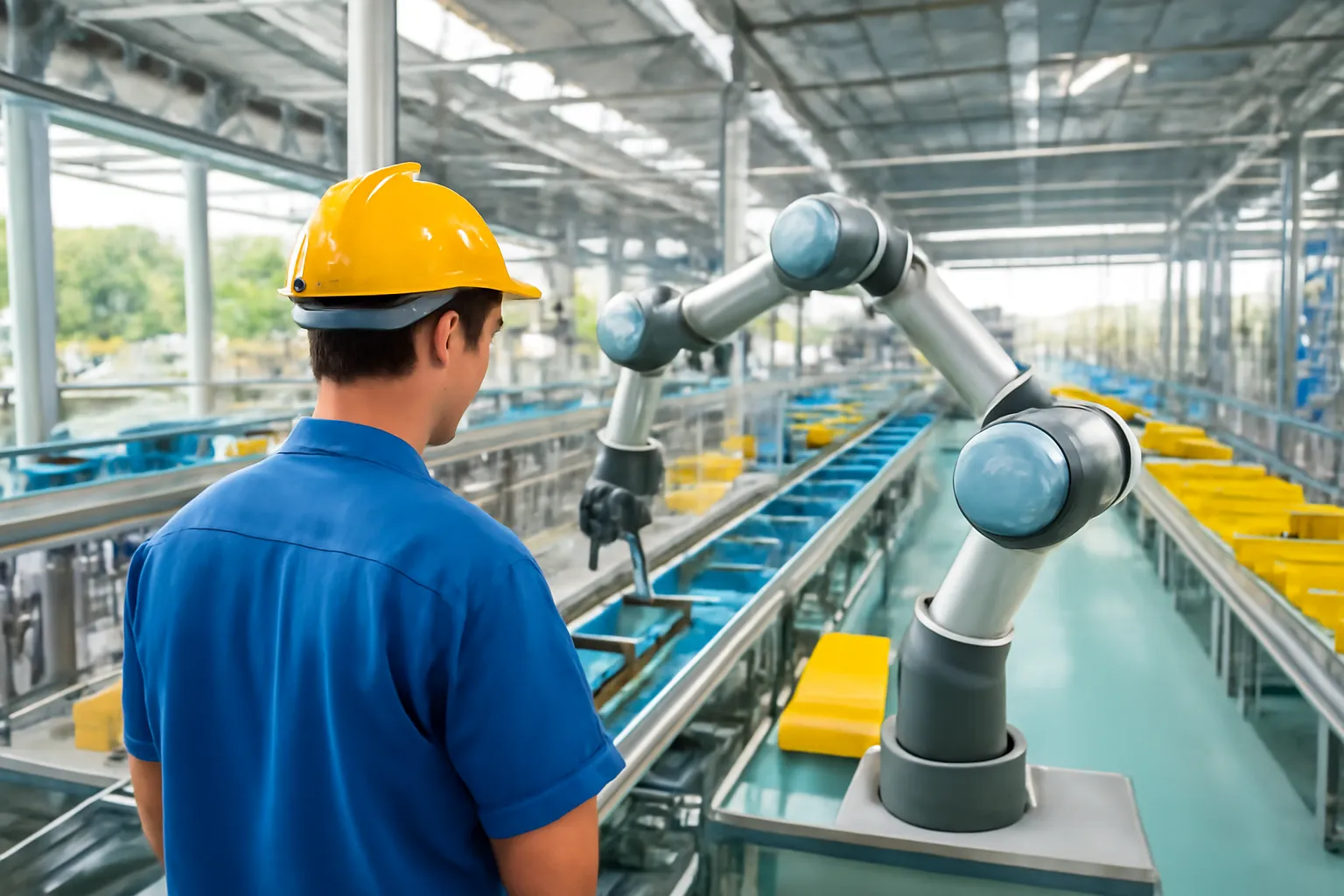
What does Industry 4.0 really mean for Vietnam? It means that machines, products and processes are increasingly connected, measured and partly automated, and that competitive advantage shifts from cheap labour alone towards data, skills and reliable infrastructure. For Vietnam, a large manufacturing and export base built on foreign investment, this is both an opportunity to move up the value chain and a risk of being stuck doing the lowest-value steps while automation reduces the need for routine labour.
This guide gives a realistic picture rather than a slogan. It explains what the term covers, maps the main global trends and what each means locally, assesses where Vietnam stands, offers a step-by-step roadmap for small and medium manufacturers, walks through three Vietnamese scenarios, lists common mistakes and points to where expert help is worth seeking.
What does Industry 4.0 actually mean, and what does it not?
The phrase began as Industrie 4.0, a German initiative in the early 2010s to describe the next stage of manufacturing after mechanisation, mass production and computer automation. The idea was that factories would become networks of connected machines and products that report their own status, with software analysing that data to adjust production in near real time. The World Economic Forum later popularised the broader phrase “Fourth Industrial Revolution”, stretching it to cover AI, biotechnology and much more.
In practical terms, Industry 4.0 rests on a handful of technologies working together: sensors and the Internet of Things to measure what machines and products are doing; networks and cloud or edge computing to move and process that data; analytics and AI to find patterns and predict problems; automation and robots to act; and digital twins, virtual models of a line or product, to test changes before making them physically.
What it does not mean is a dark factory with no workers, or a single big software purchase that transforms a company overnight. Most real Industry 4.0 progress is incremental: knowing exactly how long each machine stops and why, catching defects earlier, planning maintenance before breakdowns, and connecting the office systems that handle orders with the floor that makes the goods.
It also does not mean the same thing for every company. For a global car maker it might involve thousands of robots and integrated supply chain data. For a fifty-person workshop it might start with a tablet on each machine and an end to paper production logs. Both are legitimate, and the second is often where the fastest returns are.
The term has been stretched by marketing until almost any software can be sold as “4.0”. A useful test is to ask what will be measured that is not measured today, and what decision will change because of it. If nobody can answer, it is a label, not a project.
The main global trends and what each means for Vietnam
Global trends do not land evenly. The right-hand column is a judgement about local relevance, meant as a starting point for discussion rather than a forecast.
| Trend | What is happening globally | What it means for Vietnam |
|---|---|---|
| AI and generative AI | Rapid adoption in office work, software, customer service and design; heavy investment in models and chips. | Productivity gains for services and back-office work; pressure on routine outsourcing jobs; need for Vietnamese-language tools and AI skills. |
| Automation and robotics | Robots and collaborative robots spreading beyond car plants; cheaper sensors and vision systems. | Labour-intensive assembly will automate step by step; workers need skills to operate and maintain equipment. |
| Supply chain diversification | Companies spreading production across several countries to reduce risk. | Continued manufacturing investment, with competition from other Asian countries; pressure to raise local supplier capability. |
| Semiconductors | Governments subsidising chip production and restricting advanced chip exports. | Growth in chip assembly, testing and design; a demanding skills challenge. |
| Energy transition and data centres | Rising electricity demand from data centres; buyers demanding cleaner supply chains. | Need for reliable, clean power to attract investment; exporters asked about carbon footprints. |
| Digital public infrastructure | National digital ID, instant payments and data exchange. | Faster digital commerce and services; new fraud and privacy risks to manage. |
| Cybersecurity | Ransomware and supply chain attacks hitting factories and logistics. | Connected factories must budget for security from the start, not after an incident. |
| Traceability and standards | Major markets asking for proof of origin, sustainability and compliance data. | Exporters of agricultural and manufactured goods need reliable records and data systems. |
The common theme is that data and skills increasingly decide where value is created, while low labour cost alone becomes a weaker advantage.
Where does Vietnam stand today?
Vietnam enters this period with genuine strengths. It has become one of the region’s major manufacturing and export centres, especially in electronics, textiles, footwear and furniture, largely through foreign-invested factories. Its population is relatively young, internet and smartphone use is high, and digital payments have spread quickly, helped by the shared rails described in the WT4 explainer on digital public infrastructure. The software outsourcing industry has also built a base of engineering talent.
The constraints are just as real. Much of the export value from foreign-invested plants comes from imported components, while domestic firms often supply simpler parts or services. Spending on research and development is modest. Many small and medium enterprises still run on paper, spreadsheets and personal relationships, and struggle to meet the quality and data requirements of large foreign buyers.
Infrastructure and semiconductors: the deciding factors
Infrastructure is a deciding factor. Advanced manufacturing, data centres and chip plants all need stable electricity and water, and the global race for clean, reliable power, explained in the article on why AI uses so much electricity, affects where investors choose to build. Vietnam’s experience of power shortages during hot, dry periods in recent years shows why this matters.
Semiconductors illustrate both sides. Vietnam has a real and growing role in assembly, testing and packaging, but no advanced fabrication, and the skills required for higher-value work take years to build, a story told in more detail in the WT4 guide to the chip supply chain. That is the pattern across Industry 4.0: a real foothold, with the climb depending on skills, infrastructure and domestic firms becoming capable suppliers.
None of this is fixed. Countries move up value chains when their firms learn from foreign partners, when workers gain technical skills, and when infrastructure improves. The decisions of thousands of ordinary companies about how to adopt technology will matter as much as national strategies.
A practical Industry 4.0 roadmap for a small or medium manufacturer
This sequence works for most factories with tens to a few hundred workers. Each step should pay for itself before the next begins.
- Pick one painful problem. Choose something measurable that costs money today: machine downtime, defect rates, late deliveries or material waste. Avoid starting with technology.
- Measure it properly by hand first. Record the problem for a few weeks on simple forms or a spreadsheet. You will often find causes no one suspected, and you need a baseline anyway.
- Digitise the records. Replace paper logs with tablets or simple apps that workers can use in seconds. The goal is reliable data, not a fancy dashboard.
- Add sensors where manual data is weak. Fit low-cost sensors to count output, track machine status or measure temperature on the most important equipment. Start with one line.
- Act on what the data shows. Change maintenance schedules, retrain operators or adjust layout based on evidence, and measure the result against your baseline.
- Connect the office and the floor. Once data is reliable, link production records with orders, inventory and accounting so planning uses real numbers.
- Automate selectively. Consider robots or automated inspection for tasks that are repetitive, dangerous or quality-critical, after calculating the full cost, including maintenance and training.
- Build security and skills alongside. Separate factory networks from office networks, change default passwords on devices, and train a few staff to own the systems.
Expect each stage to take months, not weeks. Firms that move steadily usually outperform those that buy a large integrated system at once.
Three Vietnamese scenarios
A garment factory in Dong Nai. A mid-sized factory producing for foreign brands loses orders because of late shipments. The director is offered a full smart-factory package. Instead, the team first records why sewing lines stop, and finds that a large share of lost time comes from waiting for cut fabric and from a few unreliable machines. Simple digital tracking of bundles between cutting and sewing, plus planned maintenance on those machines, improves on-time delivery noticeably. Only then do they consider automated cutting, with real numbers to justify it.
A coffee exporter in Lam Dong. A cooperative exporting coffee is asked by a European buyer to prove where beans come from and how they were grown. A consultant suggests blockchain. The cooperative’s real need is reliable records: farm locations, harvest dates, inputs used and batch numbers through processing. A well-designed shared database and mobile data entry for farmers meet the buyer’s requirement at far lower cost. The lesson is to match the tool to the requirement, not to the trend.
A precision parts workshop supplying foreign plants. A family-owned machining workshop wants to supply a large electronics manufacturer, which requires detailed quality data for every batch. The owner invests in digital measuring tools that record results automatically, trains two young technicians in statistical quality control and adopts the customer’s data format. The investment is modest, but it opens the door to higher-value orders. This is what moving up the value chain looks like at the scale of one company.
In all three, Industry 4.0 started with a business problem, used data before automation, and grew in steps. The technology was the means, not the goal.
Common mistakes when companies try to “go 4.0”
Buying a platform before defining a problem. Large software or hardware packages bought on a vendor’s vision often end up half-used. Start from a measurable pain point.
Skipping the baseline. Without measuring the situation before a change, nobody can prove the investment worked, and the next request for budget gets harder.
Collecting data nobody uses. Dashboards that no one checks are cost without benefit. Every data stream should be linked to a decision and an owner.
Automating a bad process. Automation makes a messy process faster, not better. Fix layout, flow and standards first.
Ignoring the workforce. Workers who fear for their jobs or find tools awkward will work around them. Involve them early and invest in training.
Forgetting maintenance and support. Sensors, robots and software need upkeep, spare parts and someone who understands them. Budget for years, not just installation.
Connecting machines without security. Factory devices with default passwords on the office network are an open door for ransomware. Plan network separation from the start.
Copying a giant’s strategy. What works for a multinational with an engineering department rarely fits a family business. Scale ambitions to your capability.
When should you bring in experts, and which ones?
Independent advice is most valuable at the start, when choosing which problem to tackle and how to measure it, and before any large purchase. Look for advisers who are not paid by a particular vendor, such as university engineering departments, industry associations or experienced consultants who can show results in similar factories.
Bring in specialists for safety-critical changes. Installing robots, changing electrical systems or modifying machinery requires qualified engineers and attention to workplace safety rules. Network design for connected factories should involve someone with industrial cybersecurity experience, because factory systems behave differently from office IT.
Jobs, workers and public support programmes
For changes that affect jobs, such as automation that reduces the need for certain roles, consult a lawyer or HR specialist about labour obligations, and plan retraining. For export requirements on traceability or sustainability data, talk directly with buyers and with trade promotion bodies before choosing systems.
Government and international programmes supporting small and medium enterprises in digital transformation exist and change over time; check current programmes with your local department of industry and trade or business association rather than relying on old information.
Frequently asked questions
What is Industry 4.0 in simple terms?
It is the use of connected sensors, data, AI and automation to measure and improve how things are made and delivered. In practice it usually starts with better data, not with robots.
Will Industry 4.0 take away factory jobs in Vietnam?
Some routine assembly and inspection jobs will shrink as automation spreads, while demand grows for technicians who operate and maintain equipment. The pace depends on costs and investment decisions, so building technical skills is the best protection.
Where should a small manufacturer start?
With one measurable problem, such as downtime or defects, measured by hand first and then digitised. Add sensors and automation only once the data shows where they pay off.
Is Industry 4.0 only for large foreign companies?
No. Low-cost sensors, cloud software and tablets make many steps affordable for small firms, and meeting the data requirements of large buyers is often what lets local suppliers win better orders.
What skills matter most for Industry 4.0 jobs?
Technical maintenance, data literacy, basic programming, quality control and the ability to work with automated systems, plus English for documentation and foreign partners. Problem-solving matters as much as any single tool.
Do we need blockchain for traceability?
Usually not. Most buyers need reliable, consistent records, which a well-designed database can provide. Blockchain may help only when several parties must share a record without trusting one operator.