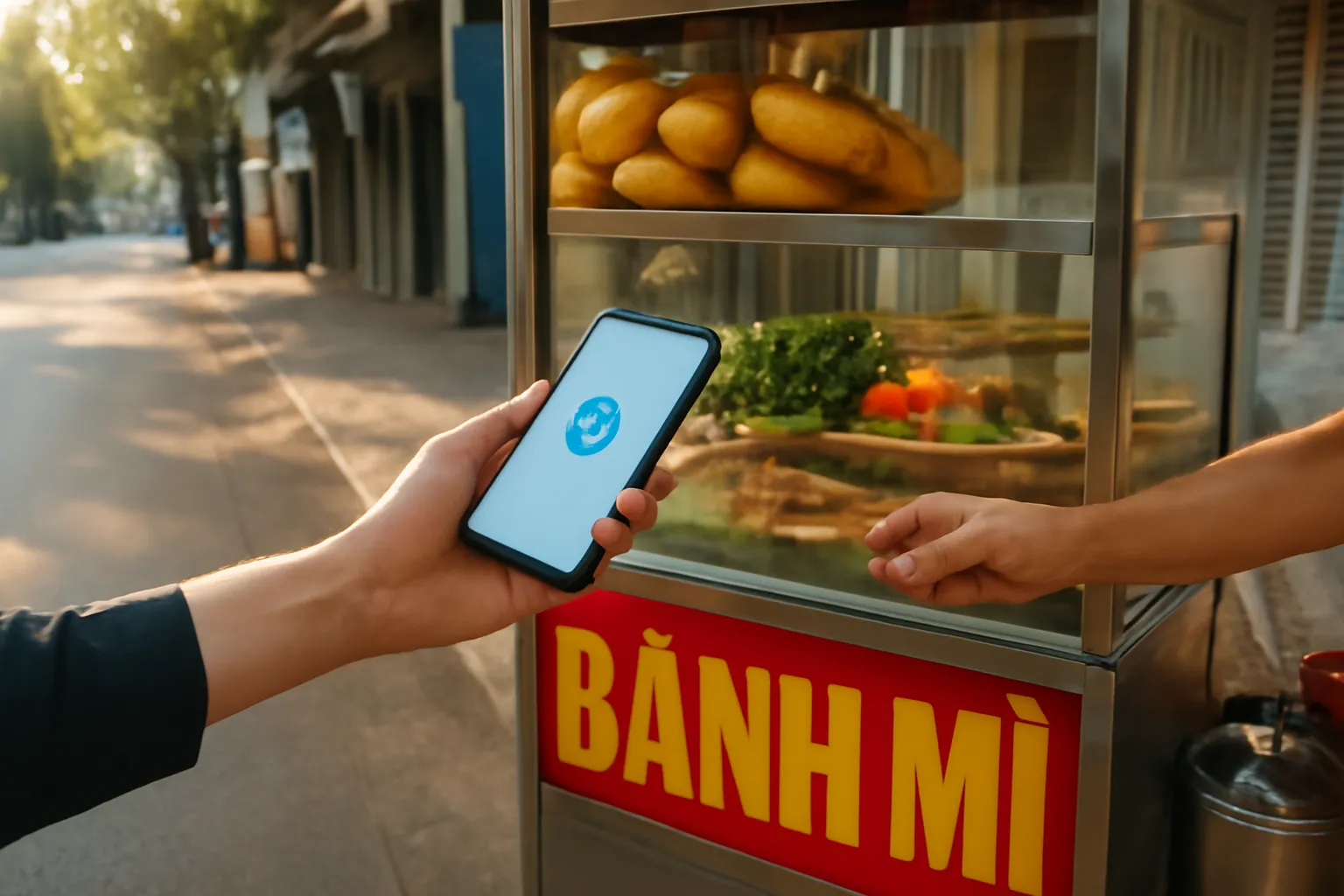
What is digital public infrastructure? It is the shared digital foundations a country builds for everyone to use, usually a digital identity system, an instant payment network and secure ways to share data, on top of which banks, businesses and public services create their own apps. India’s digital ID and instant payments, Estonia’s e-government and Brazil’s instant payment system are the best-known examples, and Vietnam’s chip-based ID cards, VNeID app and interoperable QR payments follow the same global trend.
This article explains the idea, compares the building blocks with well-known examples abroad and in Vietnam, and is honest about the risks: privacy, exclusion, outages and, very visibly, fraud that moves as fast as payments do.
What is digital public infrastructure, and why is it a global trend?
Think of roads. A government builds the road network once, and then everyone, from delivery riders to bus companies, uses it to provide their own services. Digital public infrastructure applies the same idea to the digital economy. Instead of every bank, hospital and ministry building its own identity check and payment link, the country builds shared rails that everyone can plug into.
Three building blocks come up again and again. A digital identity lets people prove who they are online with a high level of trust. An instant, interoperable payment network lets money move between any two accounts, at any bank or wallet, within seconds. And a data exchange layer lets people allow one organisation to fetch records from another with their consent, instead of carrying paper copies between offices.
How the idea spread, and where Vietnam fits
The idea gained momentum because the early examples were dramatic. India linked a national digital ID with an instant payment interface, and small merchants who had never taken cards began accepting digital payments through QR codes. Estonia moved most public services online, with secure data sharing between agencies. Brazil’s central bank launched an instant payment system that quickly became part of everyday life.
International organisations now promote this model for developing countries, arguing that public rails reduce costs, encourage competition among private apps and bring more people into the formal economy. Critics point out that the same rails concentrate power and data, and that the benefits depend heavily on how privacy, security and inclusion are handled.
Vietnam has moved along all three blocks at once: chip-based citizen ID cards, the national VNeID app for electronic identification, and bank transfers that arrive within seconds across banks, with a common QR standard that lets any banking app pay any merchant’s code.
The three building blocks: examples abroad and in Vietnam
The table names only well-known systems; details change over time, so check official sources for current features.
| Building block | What it does | Well-known example abroad | In Vietnam |
|---|---|---|---|
| Digital identity | Lets people prove who they are online and sign in to services securely. | India’s national digital ID; Estonia’s electronic ID card. | Chip-based citizen ID cards and the VNeID app for electronic identification. |
| Instant payments | Moves money between any accounts within seconds, at any hour. | India’s unified payments interface; Brazil’s instant payment system. | Round-the-clock fast interbank transfers used by most banking apps. |
| QR payment standard | Lets any compatible app pay any merchant code. | Common QR standards in several Asian countries. | A shared QR standard so one code works with many banking apps. |
| Data exchange | Lets organisations share records with the person’s consent. | Estonia’s secure data exchange layer. | Gradual connection of population data with public services; check official announcements for scope. |
| Cross-border links | Connects national payment systems so travellers and traders can pay abroad. | Regional QR payment links in Southeast Asia. | Part of regional efforts; availability depends on bank and country. |
The pattern is the same everywhere: a public or shared layer at the bottom, competing private apps on top.
Risks that come with the convenience
Fraud moves at payment speed. Instant transfers are hard to reverse, so scams that trick people into sending money pay off quickly. Banks now add checks such as face verification for some transfers, but persuasion still works.
Single points of failure. When one national system goes down, many services stop at once. Merchants need a fallback, such as cash or a second payment method.
Privacy and data concentration. Linking identity to payments and public services creates detailed records. Strong rules on who can access what, and logs people can check, are essential.
Exclusion of the less connected. Elderly people, rural residents and those without smartphones can be left behind if services become digital-only.
Identity theft with leaked documents. Photos of ID cards circulate after data leaks and are used to open accounts. Never send ID images to unknown parties.
Fake apps and phishing. Scammers create look-alike government or bank apps and websites. Install apps only from official stores and check the publisher.
Errors are hard to fix. A wrong record in a central system can follow a person across many services. Clear correction procedures matter.
Merchant account misuse. Bank accounts rented or bought from others are used to receive scam money. Lending your account to anyone carries legal risk.
What does it mean for people and small businesses in Vietnam?
For consumers, the benefits are real: paying a street vendor by QR, transferring rent instantly and handling some paperwork without queuing. The trade-off is that your phone becomes the key to your money and identity. Screen locks, two-factor authentication, careful app installation and never sharing OTPs or ID photos are now basic household safety, like locking the front door.
For small businesses, interoperable QR payments lower the cost of accepting digital payments and make bookkeeping easier, because every transaction leaves a record. It also pays to verify incoming payments in the banking app itself, not just from a customer’s screenshot, because fake transfer screenshots are a common trick.
Digital identity is also becoming the front door for public services, and organisations increasingly verify customers electronically. If you run a business that onboards customers online, follow official guidance on what verification you are allowed and required to do, and store as little identity data as possible.
Finally, keep a human fallback. A shop that can still take cash when the network fails, a family member who helps an elderly parent with digital services, a bank branch that still answers questions in person: these are not signs of being behind, but of building infrastructure that works for everyone.
Frequently asked questions
What does digital public infrastructure mean?
It refers to shared national systems such as digital identity, instant payments and consented data sharing that public and private services build on. The aim is to avoid every organisation building its own separate rails.
Is VNeID a form of digital public infrastructure?
It is part of Vietnam’s digital identity layer, used to identify citizens electronically for public services. For current features and requirements, check official government sources.
Why are instant payments attractive to scammers?
Because money arrives in seconds and is hard to reverse, scammers can move it onward before victims realise. Calling the bank immediately after a mistaken transfer gives the best chance of stopping it.
How can shop owners avoid fake transfer screenshots?
Confirm the money in your own banking app or through balance notifications before handing over goods. A screenshot shown by a customer is not proof of payment.
Does digital infrastructure leave elderly people behind?
It can, if services become digital-only. Keeping in-person and cash options and helping relatives learn safe habits reduces that risk.