Where does Vietnam fit in the global chip supply chain? Mostly in the back end: assembling, testing and packaging chips that were designed and manufactured elsewhere, alongside a small but growing chip design workforce. Vietnam does not have the advanced fabrication plants that make the most powerful chips, and building them is far harder than headlines suggest, but the back end is a real and expanding foothold.
To see why that matters, it helps to understand how a chip is made, why a handful of places control the hardest steps, and why governments now treat semiconductors as a matter of national security. This article walks through all three and ends with what the trend means for Vietnamese students, workers and businesses.
How is a chip made? The links in the chain
A modern chip passes through several very different industries before it reaches your phone. It starts with design: engineers describe billions of tiny switches and their connections using specialised software known as electronic design automation, or EDA. Many of the best-known chip brands are “fabless”, meaning they design chips but pay others to manufacture them.
Next comes fabrication, done in plants called fabs. A silicon wafer goes through hundreds of steps of depositing, patterning and etching materials, using machines that cost enormous sums and need ultra-clean rooms. The most advanced patterning relies on extreme ultraviolet lithography machines, which only one company in the Netherlands makes. Leading-edge fabrication is concentrated in Taiwan and South Korea, while older, “mature” processes used for cars and appliances are spread more widely, including in China.
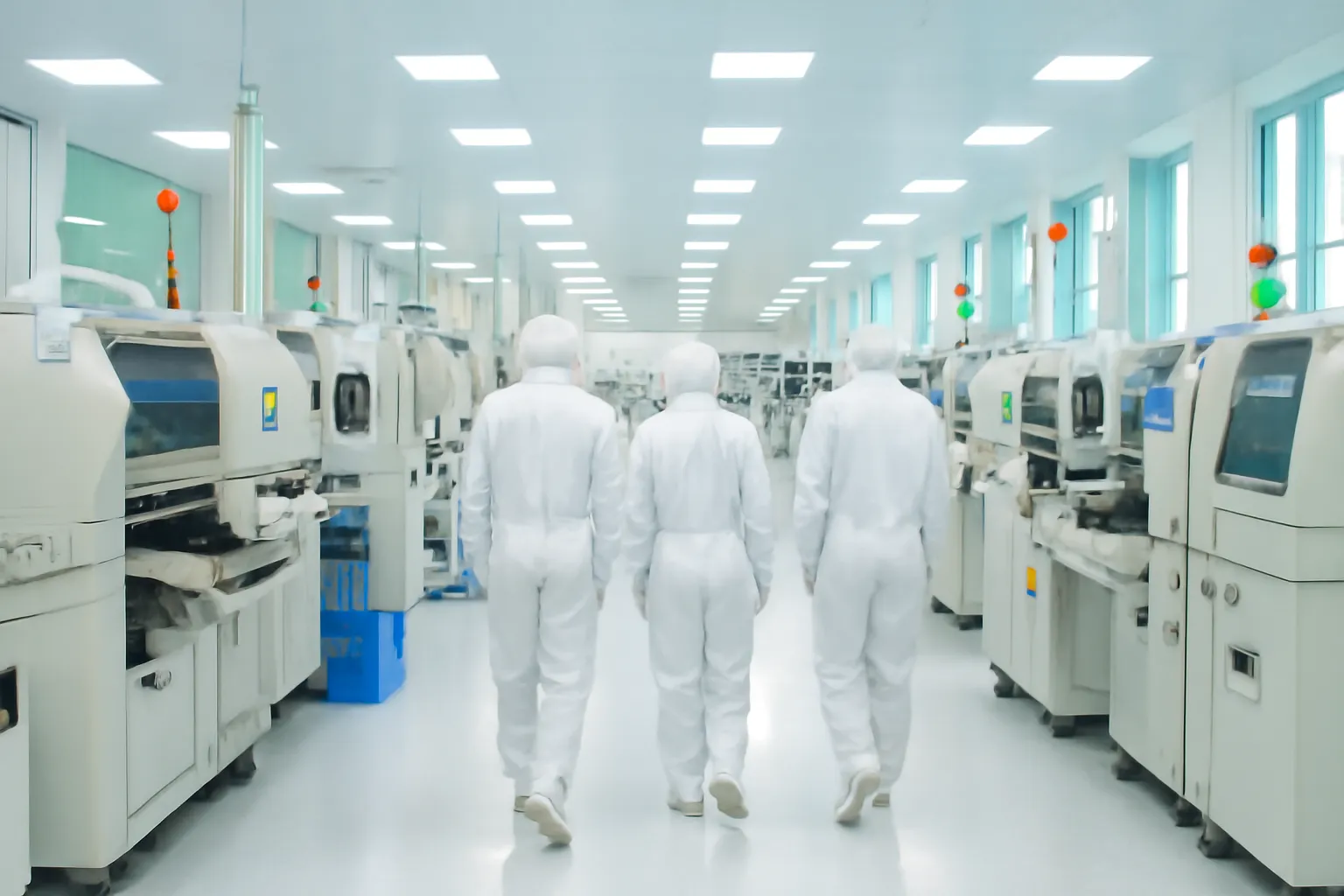
After fabrication, the wafer is cut into individual chips, which are then assembled into packages that protect them and connect them to circuit boards, and tested to make sure they work. This stage is called assembly, test and packaging, sometimes ATP or OSAT when outsourced. Southeast Asia, including Malaysia, the Philippines and Vietnam, plays a large role here.
Packaging used to be seen as the simple end of the chain. That is changing. Advanced packaging, which stacks or links several chips closely together, has become important for AI processors, because it lets designers combine components more efficiently. This shift makes the back end more valuable and more technical than it was a decade ago.
Around all of this sit materials suppliers for high-purity chemicals, gases and wafers, with Japan especially strong, and the equipment makers from the United States, Japan and Europe. No single country controls every link, which is precisely why disruptions in one place ripple everywhere.
Who does what in the chip chain, and where does Vietnam stand?
The table simplifies a complex industry, but it shows why “making chips” means very different things in different countries.
| Stage | What happens | Where it is concentrated | Vietnam’s position |
|---|---|---|---|
| Design | Engineers define the chip’s logic and layout. | United States leads, with strong centres in Europe and Asia. | A small but growing number of design teams, including local companies and foreign design centres. |
| Design software (EDA) | Tools used to design and verify chips. | A few mainly American companies. | User, not maker. |
| Manufacturing equipment | Lithography, etching and deposition machines. | United States, the Netherlands and Japan. | Not a producer. |
| Fabrication | Building circuits on silicon wafers in fabs. | Leading edge in Taiwan and South Korea; mature processes more widespread. | No large commercial fab yet; plans are discussed. |
| Assembly, test, packaging | Cutting, packaging and testing finished chips. | Taiwan, China and Southeast Asia. | Significant and growing, with large foreign-owned plants, including Intel’s facility in Ho Chi Minh City. |
| Electronics assembly | Putting chips into phones, laptops and devices. | China and, increasingly, Southeast Asia and India. | A major hub, especially for phones and electronics made by large foreign manufacturers. |
The last row is not part of chip-making itself, but it explains why Vietnam is so exposed to chip supply: its large electronics export sector depends on chips arriving on time.
Why did chips become a geopolitical issue?
Three things turned semiconductors from a business topic into a national security topic. First, the global chip shortage that followed the pandemic showed how a bottleneck in one link could halt car factories and electronics lines around the world. Governments realised that they depended on a few distant plants for products as ordinary as washing machines.
Second, advanced chips are central to AI, which governments see as strategically important, including for defence. That led the United States to restrict exports of the most advanced AI chips and chip-making equipment to China, and China to invest heavily in its own capabilities. Each round of controls reshapes where companies choose to build and source.
Third, concentration itself became a worry. When most leading-edge chips come from a small geographic area, any natural disaster or political crisis there becomes a global risk. The United States, Europe, Japan, South Korea and others have responded with large subsidy programmes to bring more manufacturing home or to friendly countries.
An opening for Vietnam, and the competition for it
For countries like Vietnam, this creates an opening. Companies trying to diversify away from depending on a single country look for locations with political stability, a workforce, industrial parks and trade agreements. Vietnam has attracted investment in electronics and chip packaging partly because of this “diversification” logic, often described as a China-plus-one strategy.
The opening is real but competitive. Malaysia, India, Thailand and others are pursuing the same investments, and the decision factors are practical: reliable electricity and water, skilled engineers, transparent procedures and supplier networks. Announcements of intent are common; finished, operating plants are what count.
What does this mean for Vietnamese workers and businesses?
Engineering skills are the bottleneck. Chip design, process engineering and test engineering need deep training in electronics, physics and software. The government and universities have set ambitious training goals, but the gap between a degree and industry-ready skill is wide.
The back end offers the most jobs now. Assembly, test and packaging plants employ technicians and engineers today. Roles in equipment maintenance, quality control and test programming are concrete entry points.
Design is the higher-value path. Design work pays well and does not need a fab nearby, but it requires strong fundamentals and English. Some Vietnamese engineers already work on design projects for foreign companies.
Fabs are a long, expensive project. A leading-edge fab costs a fortune, takes years and needs a full ecosystem of suppliers. Be cautious about headlines that treat a memorandum as a factory.
Supply chain shocks reach local firms. Small manufacturers of electronics, motorcycles or appliances can be hit when chips run short. Diversifying suppliers and keeping some buffer stock of critical parts reduces risk.
Infrastructure decides investment. Stable power, clean water, logistics and fast customs matter as much as tax incentives. Improvements here benefit every industry, not only chips.
Students should build fundamentals. For students attracted by semiconductor jobs, solid mathematics, circuits, programming and English matter more than short certificates with trendy names.
Watch for real signals. Track whether announced projects reach construction, hiring and production. Those signals say more about the trend than conference speeches.
Frequently asked questions
Does Vietnam make computer chips?
Vietnam assembles, tests and packages chips in large foreign-owned plants and has a growing design workforce, but it does not yet fabricate advanced chips. Most leading-edge fabrication happens in Taiwan and South Korea.
What is the difference between a fab and a packaging plant?
A fab builds the circuits on silicon wafers through hundreds of precise steps, while a packaging plant cuts, encloses and tests finished chips. Fabs are far more expensive and technically demanding.
Why is chip packaging becoming more important?
Advanced packaging links several chips closely together, which helps AI processors and other high-performance chips work efficiently. That makes the back end more technical and more valuable than before.
What should students study for a semiconductor career?
Electronics, electrical engineering, physics, materials science or computer engineering, with strong mathematics, programming and English. Internships in testing or design teams are valuable early experience.
How do US-China chip restrictions affect Vietnam?
They push companies to diversify where they build and source, which has brought some electronics and packaging investment to Vietnam. They also add compliance requirements and uncertainty for firms in the chain.