Blockchain is worth using for product traceability only when several companies that do not fully trust each other need to share one record that none of them can quietly change. If a single company, or a single trusted platform, keeps the records, a well-run database with audit logs usually does the job faster and cheaper. In both cases the hardest part is the same: making sure the data entered at the farm, the warehouse or the factory is true.
In Vietnam, "blockchain traceability" stickers have appeared on fruit, seafood and packaged goods. Some systems behind them are real shared ledgers; some are ordinary websites with a QR code. This guide helps a business owner tell the difference and decide which one they actually need.
What traceability actually needs
Strip away the technology and traceability is a chain of simple statements: this batch came from this farm, was harvested on this date, was treated with this, was packed here, kept at this temperature, shipped on this truck, and arrived there. A buyer, a regulator or a consumer wants to see those statements and believe them.
Believing them depends on two separate things. First, was each statement true when it was written? Second, has anyone changed it since? Blockchain only helps with the second question. It makes later changes visible. It does nothing about a worker typing the wrong farm code, a supplier inventing a harvest date, or a sticker moved from a good crate to a bad one.
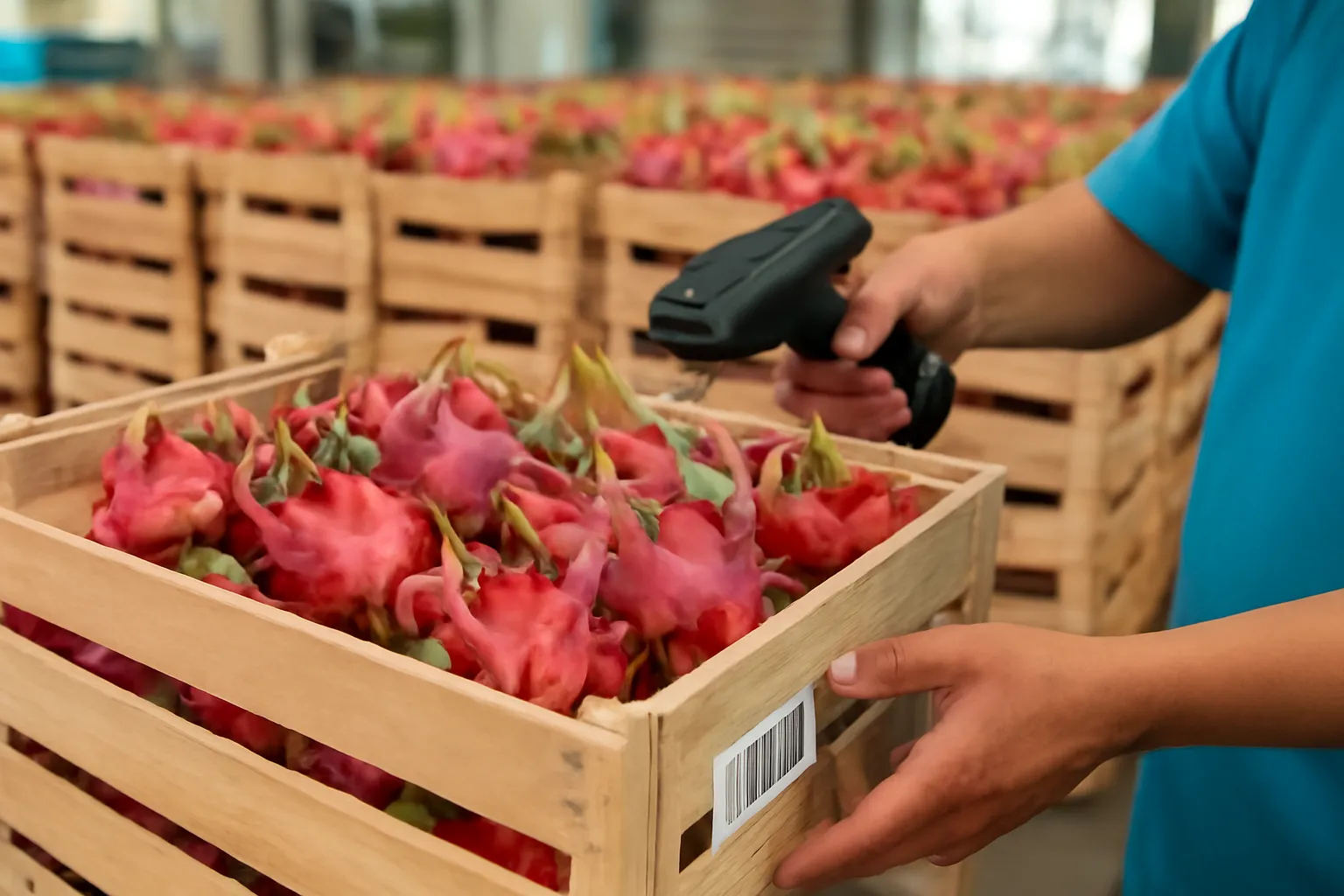
That is why experienced people in the field talk about the "first mile" problem. The records are only as honest as the moment of capture. Barcodes printed to an agreed standard, scales and thermometers that log automatically, photos with location and time, and spot checks by an independent inspector do more for trust than any ledger technology.
Once you see traceability this way, the technology choice becomes much clearer. You are not choosing "blockchain or no blockchain". You are choosing how to capture data honestly, and then where to store it so that the people who need to trust it can.
Database or blockchain? A quick decision table
Answer each row honestly for your own supply chain. Most small and medium businesses land mostly in the middle column.
| Question | A database with audit logs is likely enough | A shared ledger may be worth it |
|---|---|---|
| Who writes the records? | Mainly your own company or one trusted platform | Many independent companies, none willing to let another run the system |
| Who needs to trust the records? | Your customers, who already trust your brand | Foreign buyers, partners or regulators who want proof no single party can edit history |
| How often does data change? | Often, with corrections that are normal | Rarely, and every change must be traceable to whoever made it |
| What is the budget and skill level? | Limited, with a small IT team or none | Enough to run nodes or pay a consortium, with partners sharing cost |
| What happens if the vendor disappears? | You can export the data and move on | Partners still hold copies; the record survives any one member leaving |
If most of your answers fall in the middle column, a "blockchain" label will mostly add cost. That is not a failure; it is a sensible decision.
What a buyer or consumer actually sees when they scan
A web page, not the blockchain itself. Scanning a QR code opens a normal website. Whether it reads from a ledger is invisible unless the page shows verifiable references.
A transaction reference they can check independently. Serious systems show a transaction ID or hash that can be looked up on an explorer outside the vendor's own site.
Batch-level or item-level detail. Most systems trace by batch, not by individual fruit or fish. That is normal but should be stated honestly.
Photos, certificates and inspection results. These matter more to most buyers than the storage method. Make sure dates and locations are present.
A link that still works next year. Codes printed on packaging outlive many traceability start-ups. Ask what happens to the links if the provider shuts down.
Clear wording without overclaiming. "Recorded on blockchain" does not mean "certified safe". Labels that blur the two invite complaints and, potentially, legal trouble.
A way to report a problem. Good systems let a buyer flag a mismatch, and someone in the company actually reads it.
Running a small pilot without wasting money
Before committing to any platform, test on one product line and one season. The goal is to learn where data breaks, not to impress anyone.
- Pick one product and one route. For example, one fruit variety from a handful of farms to one export packing house.
- Map every hand-over. Write down who touches the product, what they record now, and on what: paper, spreadsheet, app.
- Fix capture first. Introduce standard barcodes on crates, automatic weight and temperature logging, and photos at key steps before choosing storage.
- Store in the simplest system that works. Start with a shared database or spreadsheet with change history. Note every moment a partner disputes or edits data.
- Measure the disputes. If partners rarely argue about records, a ledger adds little. If they argue constantly and none trusts the others to host data, a shared ledger becomes interesting.
- Talk to the buyer. Ask what proof they actually need. Many importers care more about certificates, residue tests and cold-chain logs than the database technology.
- Decide with numbers from the pilot. Compare cost, time spent per batch and errors caught before choosing a long-term system.
The honest limits, and where to get help
A blockchain traceability project can still be worthwhile even when it is not strictly necessary, for example if a major buyer requires it or if an industry association sets one up and shares the cost. In those cases, join with eyes open: understand what is stored, who controls access, and how you can leave.
Be careful with vendors who promise that blockchain will "guarantee" quality, "eliminate fraud" or raise your selling price. None of those is something storage technology can promise. Ask for references from businesses of similar size, and talk to them directly.
For export products, the requirements of the destination market matter more than any technology choice. Talk to your trade association, the importing partner and, where relevant, the agencies responsible for food safety and plant or animal health to learn what documentation is actually required.
Frequently asked questions
Does a blockchain QR code prove a product is genuine?
Not by itself. It can show that records were not altered after they were written, but not that they were true, nor that the code is on the right package.
Is a private blockchain better than a database?
If one company controls every node, a private blockchain offers little that a database with good audit logs cannot. It becomes more meaningful when several independent organisations each run a node.
Do export buyers require blockchain traceability?
Most require reliable traceability and documentation, not a specific technology. Ask your buyer and trade association what they actually check.
What is the hardest part of a traceability system?
Capturing accurate data at the farm, the boat or the factory floor, every day, by busy people. Any technology fails if that step is careless.
How do I check if a "blockchain" label is real?
Look for a transaction reference you can verify on an independent explorer, and ask the vendor which network is used and who runs the nodes. If they cannot answer clearly, treat it as a normal database.