A seed phrase, usually 12 or 24 ordinary words, is a human-readable backup from which your wallet can rebuild every private key it uses. Whoever has those words owns the assets, with no password reset and no appeal. Store it offline, on paper or metal, in at least two safe places, and never type it into a website, a chat or a photo.
Most losses do not come from clever hacking. They come from a screenshot synced to a cloud account, a note in an email draft, a phrase typed into a fake "wallet verification" page, or a backup nobody in the family knew existed. This guide covers what the phrase is, where to keep it, and the habits that keep it safe for years.
Seed phrase, private key, password: what is the difference?
A private key is a very large secret number. Your wallet uses it to sign transactions, and the network checks those signatures against your public address. If someone else learns the private key, they can sign transactions as you, and the network will accept them without question.
A modern wallet manages many keys, one for each address and often for several networks. Writing all those numbers down would be impractical, so wallets follow a widely used standard that generates every key from one master secret. That master secret is shown to you as a list of words taken from a fixed dictionary. That list is your seed phrase, also called a recovery phrase or mnemonic.
Your app password or PIN is different again. It only unlocks the app on this particular phone or computer. If you lose the phone, the password is useless; the seed phrase is what lets you rebuild the wallet on a new device. If a thief gets the seed phrase, your password is equally useless, because they will simply restore the wallet on their own device.
Some wallets also offer an optional extra word, often called a passphrase. Combined with the seed phrase it creates a completely different wallet. It adds real protection if someone finds your written words, but if you forget the passphrase, the assets behind it are gone. It is a tool for people who are confident about their own record-keeping, not a default.
Where should you keep a seed phrase?
Write it by hand on the card that came with the wallet, or on good paper. Use a pen, not pencil, and write clearly. Check each word against the wallet's screen, then check the order a second time.
Consider a metal backup for the long term. Paper burns, fades and gets wet. Stamped or engraved steel survives fire and floods far better, which matters in a humid climate and in houses prone to flooding.
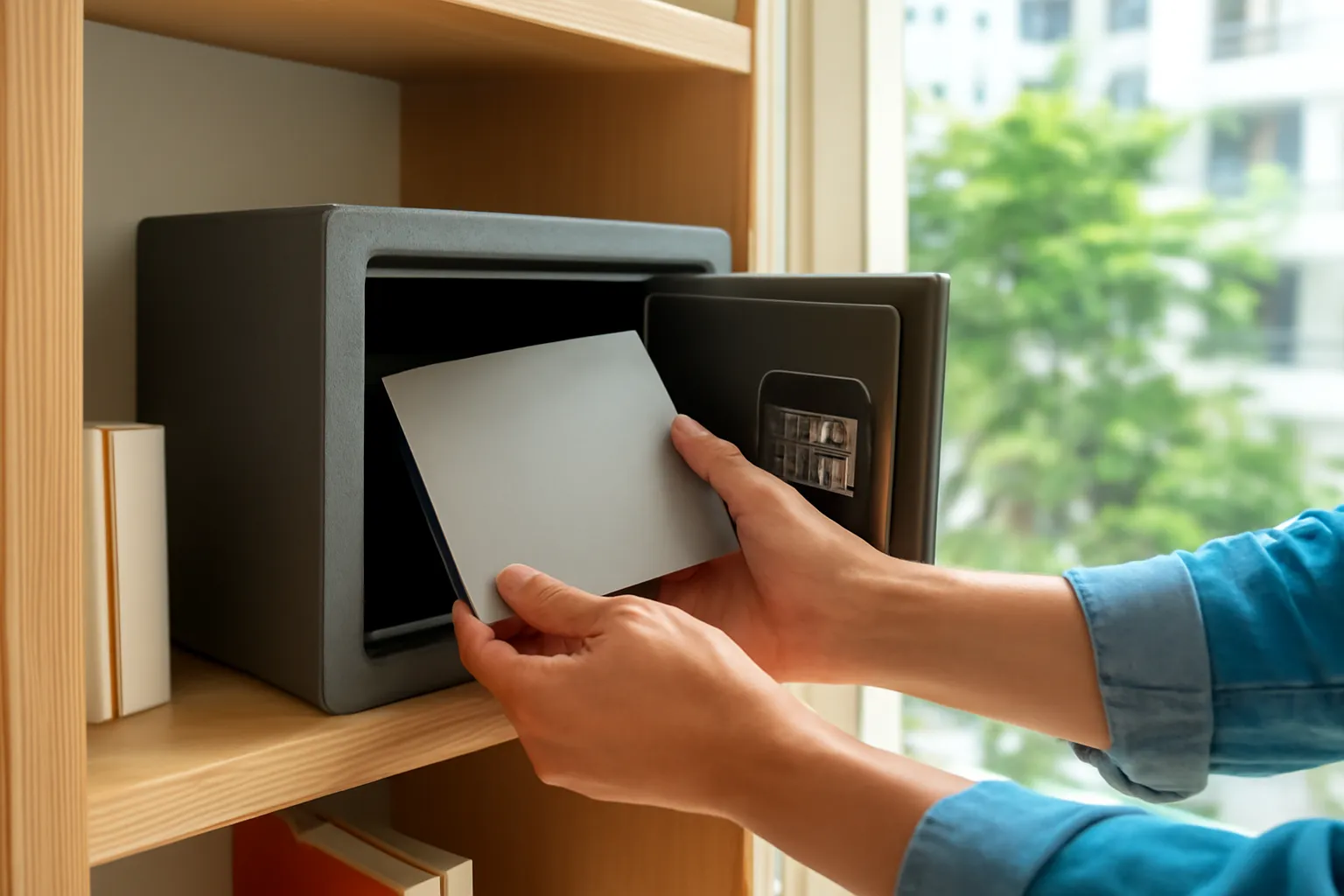
Keep two copies in two different places. One at home in a hidden, dry spot or a safe, one somewhere you trust elsewhere. A single copy is a single point of failure.
Do not store it in a photo, ever. Phone galleries sync to cloud accounts automatically. A screenshot of a seed phrase is one leaked password away from an empty wallet.
Do not keep it in notes apps, emails, chat to yourself or password managers you are unsure of. Anything online can be breached, and anything synced across devices multiplies the places it can leak from.
Do not split the words in half and hide each half separately. It feels clever, but it halves the guessing work for anyone who finds one half and doubles the chance you lose a piece. Proper splitting schemes exist, but they are advanced tools.
Label the hiding place vaguely. An envelope marked "crypto wallet backup" tells a burglar exactly what to take. Something boring is safer.
Test a recovery once, with a small amount. Before moving anything significant, wipe or reset a test wallet and restore it from your written words. Discovering a misspelled word now is much better than discovering it in three years.
Setting up a new wallet backup, step by step
Do this calmly, at home, with no one looking over your shoulder and no camera pointed at the table.
- Create the wallet offline if the device allows it. For hardware wallets, the phrase is generated on the device itself and never touches your phone or computer.
- Write the words in order as they appear. Number each word. Do not rely on memory, and do not type them anywhere "just to check".
- Confirm on the device. Most wallets ask you to re-enter some words to prove you wrote them correctly. Take it seriously rather than rushing through.
- Make the second copy straight away. People who plan to "do it later" rarely do. Copy from the first sheet while you are still focused.
- Store both copies in their places. Dry, hidden, not labelled, and away from the device itself, so one burglary or one fire cannot take both.
- Do a small test restore. Send a tiny amount, reset, restore from the words, and confirm the funds appear. Then move what you intended.
- Write a short note on how your family would find it. Not the words themselves, but where they are and which wallet they belong to. More on that below.
Mistakes that empty wallets, and how to avoid them
Typing the phrase into a website to "sync", "validate" or "claim". No legitimate service needs your seed phrase. A page asking for it is a theft page, however professional it looks.
Giving it to "support". Real support staff never ask for it. Scammers in group chats often pose as admins and reach out privately after you post a question.
Buying a hardware wallet with a pre-written recovery card. If a phrase came already printed in the box, someone else knows it. Return the device and buy from the manufacturer or an authorised seller.
Restoring the phrase on a phone full of unknown apps. Malware that reads the clipboard or screen can capture it. If you must restore on a phone, use one that is updated and lightly used.
Storing the phrase together with the device. Someone who steals the bag gets both the key and the lock.
Assuming the exchange holds a seed phrase for you. If your assets sit on an exchange, you have an account, not a seed phrase. That is a different risk, covered in our wallet guides.
Keeping it so secret that nobody can ever find it. Many assets are lost not to thieves but to illness, accidents or death. Security that nobody can inherit is incomplete.
Planning for your family without handing over the keys
Inheritance is the part almost everyone skips. Families in Vietnam often know roughly where the gold, the land papers and the savings book are kept, but have no idea that a relative held digital assets, let alone how to reach them. A wallet with no instructions might as well not exist.
A simple approach is a sealed letter kept with your other important documents. It says which wallet you used, roughly what is in it, where the backup is stored, and who to ask for technical help. It does not contain the words themselves. Your spouse or adult child knows the letter exists. You update it whenever something changes.
If the amounts are significant, talk to a lawyer about how digital assets fit into a will under current Vietnamese rules, which are still developing. Ask, too, whether a notary or a trusted professional should hold the letter. The goal is a plan where a thief who finds one piece learns nothing useful, while your family, with the letter and the backup, can recover everything.
Frequently asked questions
Can I recover my wallet if I lose the seed phrase but still have the phone?
While the wallet app still opens, move the assets to a new wallet with a fresh backup straight away. If the phone also fails, nothing can rebuild the keys.
Is a 24-word phrase safer than 12 words?
Both are far beyond what anyone can guess by brute force today. Real-world risk comes from how the words are stored and who sees them, not from the length.
Should I store my seed phrase in a bank safe deposit box?
It can be one of the two locations, as it protects against fire and burglary at home. Check how your family would access the box if you were unavailable.
Someone in a group chat offered to help me fix my wallet. Is that normal?
It is one of the most common scam patterns. Do not share your screen, your phrase or any file, and get help only through the wallet's official site that you type yourself.
I already took a photo of my seed phrase. What now?
Treat the wallet as exposed. Create a new wallet with a new phrase written on paper, move the assets across, then delete the photo from the phone and every cloud backup.
If I lose money to a fake wallet page, who do I contact?
Report it to the police with screenshots and transaction details, and alert your bank if bank cards or transfers were involved. Recovery is rare, but reports help investigations.